VNP series
- Load
- 1,500 to 3,000 kg by model
- Lift
- 3 m on VNP15, 4.5 m optional
- Speed
- Up to 5.4 km/h
- Navigation
- 3D lidar SLAM, no markers or guides
Self-driving forklifts that read the site and plan their own routes.
Sold and running daily at many sites, with reference customers you can call.
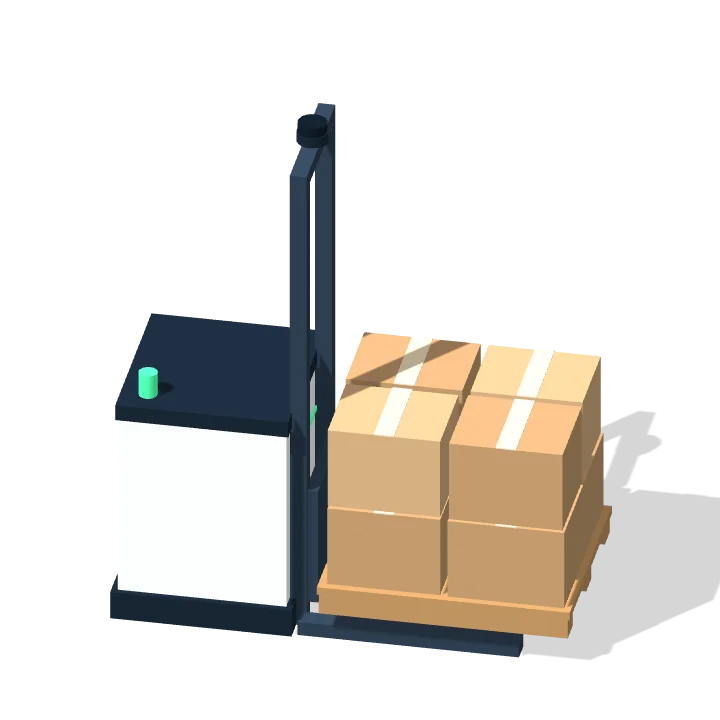
An autonomous forklift maps the site with lidar or cameras, plans its own route and moves pallets without a driver. It uses AI perception to read its surroundings, so it does not depend on reflectors, magnetic tape or floor codes.
We list a forklift only if it drives without reflectors, magnetic tape or floor codes, and uses AI perception to read the site. Guided AGV forklifts are a commodity, so we leave them out.
A 2024 price guide puts forklift AGVs at about US$75,000 to US$200,000 each. Chinese vendors quote per project.
VisionNav passes our test. Its trucks navigate without markers and use AI and deep learning for perception. It reports more than 5,000 units in use and 750+ projects.